

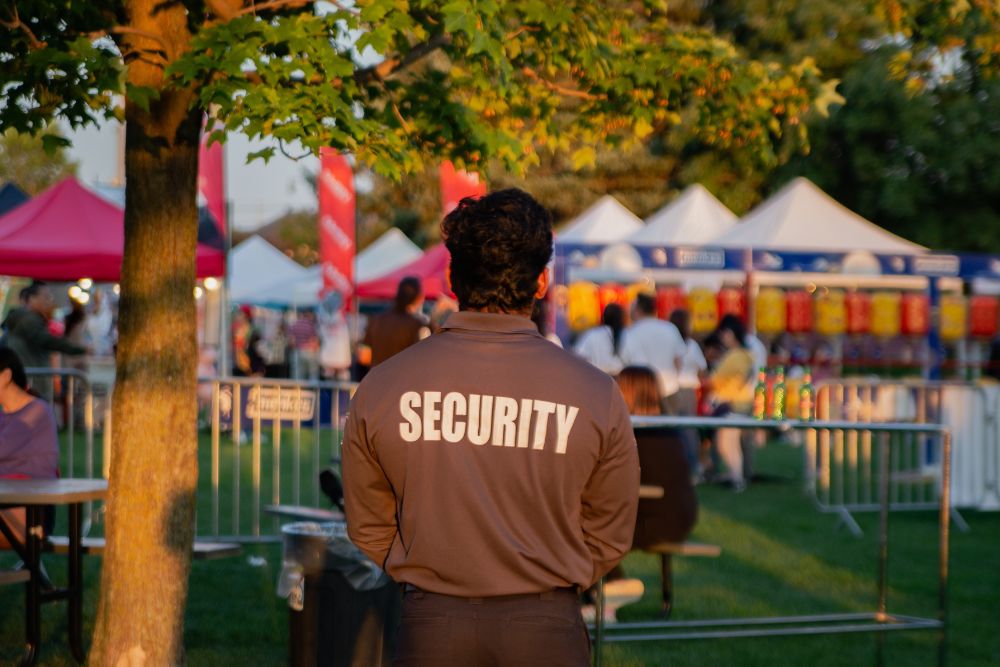
If you’ve driven down Loop 101 or tried booking a table in Old Town Scottsdale lately, you already know—the season is here.
Between the WM Phoenix Open, Cactus League Spring Training, and major festivals like Innings Festival in Tempe, the Valley’s population effectively doubles between February and March.
For venue owners and event organizers, this is the revenue window that can make the year.
For security teams, it’s also the highest-risk quarter of the calendar.
At Brownstone Private Security, we see what happens when tens of thousands of people flood open-air venues, golf courses, stadiums, and temporary event sites. The difference between a successful event and a PR nightmare usually comes down to three things:
The Perimeter. The Parking Lot. The Temperament.
Here’s how Brownstone prepares clients to survive—and thrive—during high-event season in the Valley.
1. The “Hard Perimeter” Strategy: Keep the Chaos Out
One of the most common mistakes in Phoenix event planning is a porous perimeter. Organizers often over-focus on ticket gates while ignoring desert washes, fence lines, and temporary construction barriers.
We use what we call the Desert Sentinel approach:
360-Degree Coverage
Security doesn’t stop at the entrance. Our teams patrol full perimeter lines, including washes, uneven terrain, and temporary fencing. In Arizona, “natural barriers” often become easy access points if they’re not actively monitored.
Vehicle Hostile Mitigation
Gridlock traffic creates frustrated drivers. We deploy visible, marked units to enforce fire lanes, restricted zones, and pedestrian buffers—stopping problems before a vehicle ever becomes a threat.
2. “Soft Inside” Security: Hospitality Meets Authority
Once guests are inside the venue, the mission shifts. High-visibility force is replaced by crowd management and de-escalation.
Brownstone officers are trained to balance authority with approachability—especially critical in Arizona’s climate.
De-Escalation First
Heat, alcohol, and dense crowds shorten tempers quickly. Our teams are trained to identify pre-incident indicators—agitation, verbal escalation, aggressive body language—and intervene early using a calm, service-oriented approach.
Hydration as Risk Management
In Arizona, hydration is safety. Our officers know the locations of medical tents and water stations and proactively guide guests who show signs of distress. This isn’t just courtesy—it’s proactive liability control.
3. The Parking Lot: Where the Real Liability Lives
Most venues treat parking as an afterthought. We treat it as Zone One.
Industry data consistently shows that a majority of event-related incidents—theft, vandalism, assaults, and disputes—occur outside the ticketed area.
Ingress Patrols
Bike Patrol units monitor parking lots during arrival, keeping tailgating, open containers, and boundary violations under control before they escalate.
Post-Event Egress Control
When events end, risk increases. Traffic congestion and crowd frustration peak. Our teams shift from observation to active direction, coordinating with local law enforcement to safely clear lots and protect staff and attendees.
4. Adapt or Fail: The 2026 Security Landscape
Security expectations have changed.
With updated Arizona private security licensing and compliance standards for 2025–2026, venues can no longer rely on under-trained or uninsured staffing models.
When you’re hosting 10,000 people at a festival in Gilbert or managing a high-net-worth gala in Paradise Valley, you need more than “guards in t-shirts.”
Brownstone Private Security delivers licensed professionals, scalable manpower, and deep local knowledge. We don’t just watch crowds—we manage environments.
Secure Your Date
High-event season calendars fill fast. If you’re planning an event in March or April, the time to finalize your security plan is now—not weeks before gates open.
Make your event memorable for the show, not the safety issues.
👉 Contact Brownstone Private Security for an Event Security Consultation


Leave A Comment