

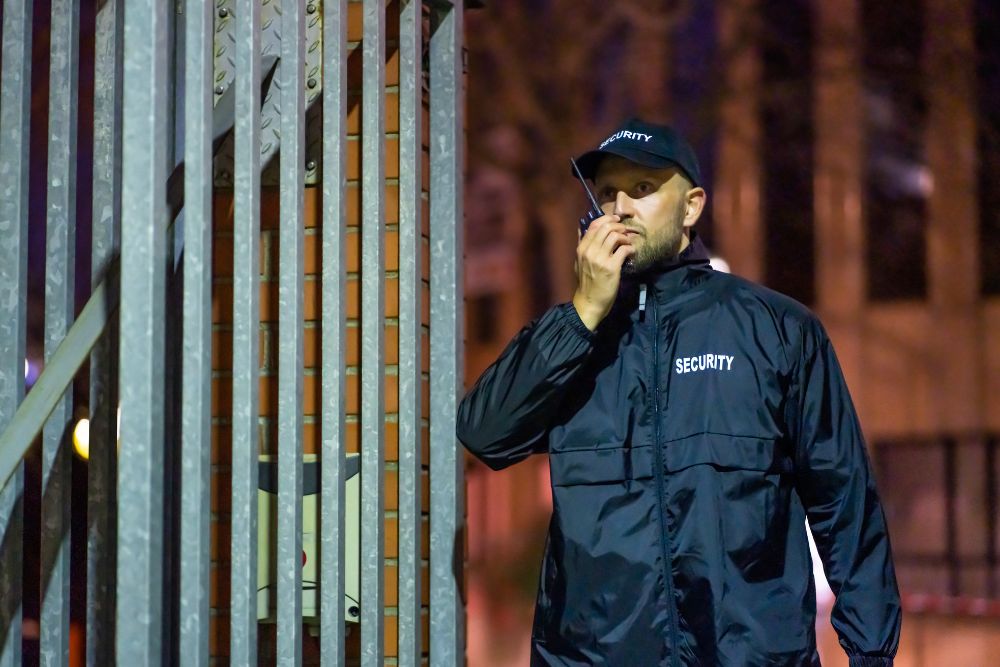
In the Valley, “security” isn’t just about locking the front door at 5:00 PM. For Property Managers in Scottsdale, hotel GMs in Phoenix, and retail owners in Tempe, the real challenge often lies just beyond the threshold—in the parking lots, the breezeways, and the dark corners of your perimeter.
Arizona faces unique security challenges. Our expansive outdoor retail centers and open-air apartment complexes mean that recognizing true threats versus harmless activity is a daily necessity. And right now, in January, the colder nights and earlier sunsets bring a specific set of risks that look very different than they do in July.
At Brownstone Protective Services, we believe that safety starts with situational awareness. Here is The Brownstone Standard guide to spotting, interpreting, and reporting suspicious activity without putting your staff at risk.
1. The Seasonal Shift: What Does “Suspicious” Look Like in January?
Context is everything. In the summer, we look for people seeking shade. But right now, with temps dropping into the 40s at night, the behavior shifts.
Train your staff to look for these specific Winter Indicators:
- The “Warmth Seeker”: In January, transients aren’t looking for shade; they are looking for heat and enclosure. Be hyper-vigilant about “transitional spaces” like laundry rooms, pool pump sheds, stairwells, and lobby vestibules. If someone is lingering in these areas without a key fob or distinct purpose, they are likely scouting a place to sleep.
- The “Early Darkness” Prowler: The sun is setting around 5:30 PM. We see a spike in vehicle break-ins during the “commuter window” (5:00 PM – 7:00 PM). Watch for individuals weaving between cars in the dark while residents are actively coming home. They use the bustle of traffic as cover.
- The “Tailgate” Tester: With the holiday rush over, delivery traffic slows down, but the habit of leaving gates open persists. Watch for vehicles waiting by the keypad without dialing. If they aren’t calling a resident, they are waiting for you to open the breach for them.
2. The Golden Rule: Observe, Don’t Engage
Your front desk staff, maintenance crew, and concierges are your eyes and ears—but they are not law enforcement. Confrontation escalates risk.
We teach the O.D.E. Protocol (Observe, Distance, Elaborate):
- Observe: Watch the behavior, not just the person. Are they agitated? Are they casing vehicles? Are they talking to themselves or others?
- Distance: Maintain a physical barrier. Do not approach a suspicious individual alone, especially in isolated areas like dumpster enclosures or parking structures.
- Elaborate (The 5 Ws): If you need to call 911 or your private security patrol, “Some guy acting weird” isn’t helpful. You need details:
- Who: Gender, approximate age.
- What: Specific behavior (e.g., “Pulling on door handles”).
- Wear: Clothing color, distinctive shoes, hats.
- Where: Exact location on the property (e.g., “Northwest corner, near the fire lane”).
- Weapons: Did you see a bulge in the waistband or a knife clip?
3. When to Call: Police vs. Private Security
In many Arizona municipalities, police response times for non-violent calls are stretched thin. Knowing who to call can save crucial time.
Call 911 Immediately If:
- You see a weapon.
- There is an active fight or physical assault.
- Someone is forcibly trying to enter an occupied building or home.
Call Your Private Security Partner If:
- Someone is loitering or sleeping in a vestibule/stairwell (Trespassing).
- There is a noise complaint or non-violent disturbance.
- You find evidence of drug use or vandalism.
- A gate is stuck open (creating a security vulnerability).
This is where the “Brownstone Difference” matters. Unlike a municipal dispatch that might take hours for a trespassing call, our mobile patrol units are dedicated to your specific zone and can often respond rapidly to de-escalate the situation.
4. Hardening the Target: The Brownstone Approach
You can’t always stop people from walking onto your property, but you can make it an unappealing target. Criminals are looking for the path of least resistance.
- Lighting is Law: With the sun setting early, dark corners are invitations. Ensure your LED lot lights are functioning.
- Secure the “Warm Zones”: Check the locks on your utility rooms and laundry centers daily. These are the #1 targets for vagrancy during Arizona winters.
- Visible Deterrence: Signage works, but presence works better. A marked Brownstone patrol vehicle cruising the lot sends a clear message: “This site is watched.”
The Bottom Line
Your tenants, guests, and homeowners rely on you to create a safe environment. You don’t have to be paranoid, but you do have to be prepared. By training your team to spot the signs and knowing exactly who to call, you turn your staff from passive bystanders into active guardians of your community.
Is your current security team reactive or proactive?
If you are worried about blind spots on your property, let’s fix them.
[The Arizona Safety Checklist]
Does Your Property Pass the Test?
- [ ] Are your “No Trespassing” signs compliant with ARS 13-1502?
- [ ] Have you audited your lighting timers to match the 5:30 PM sunset?
- [ ] Do you have a documented protocol for staff when they encounter a transient encampment?
If you checked “No” to any of these, you might be exposed to liability.
Schedule Your Free “Boots on the Ground” Site Assessment
(We’ll walk your property, identify the vulnerabilities, and give you a plan-no strings attached.)


Leave A Comment